
Geology establishes which mineral is present in an area, where it is and how it is arranged in the ground. With that information you decide where to open a working or where to drill, and it supports the reserves the PTO declares to the Mining Authority.
From regional geology to the lithogeological map
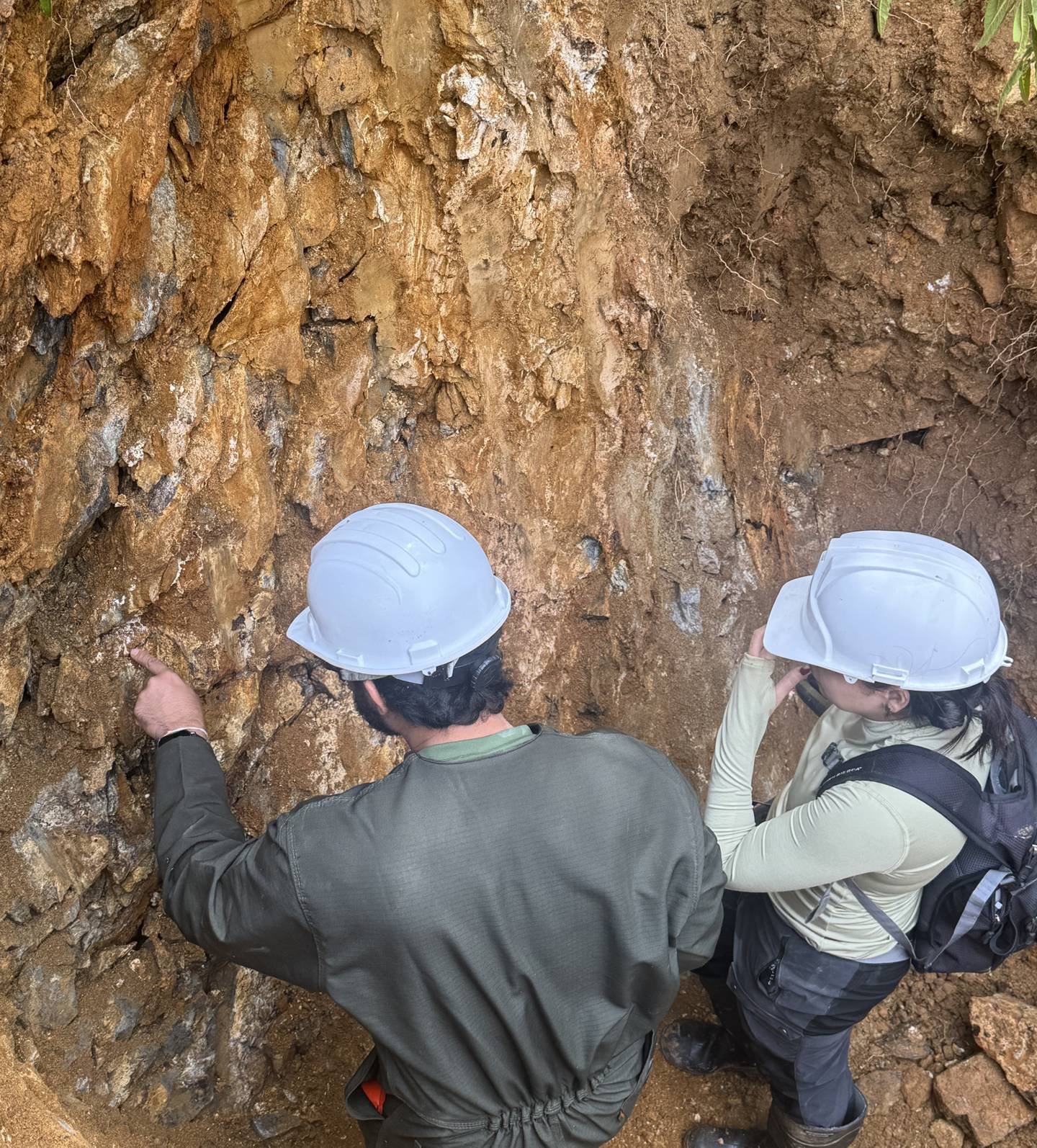
The study starts from basic geology and the regional framework of the zone, which identifies the rock units and the structures controlling mineralization. Within that framework, local geology locates the deposit and its relationship with those structures. In the field we record each outcrop and describe its lithologies, that is, rock type, texture, alteration, faults and veins. With that information the lithogeological map and the sections showing how the mineralized body lies are prepared.
Sampling, test pits and drilling
How a sample is taken depends on what you want to know and on how the rock occurs:
- Channel sampling: cuts across the vein from side to side, so the sample represents its full width.
- Soils and stream sediments: sampled where the rock is covered.
- Test pits and trenches: expose soil, weathered rock and fresh rock at a lower cost than drilling.
- Drilling: the only thing that confirms continuity at depth, with each core logged interval by interval.
Sampling protocol and quality control
Each sample carries a code, coordinates, description and date, and travels with its chain of custody to the laboratory. Quality control, known as QA/QC, inserts duplicates, blanks and standards among the routine samples, and with them the laboratory's precision, the absence of contamination and the accuracy of the results are verified. A formal resource and reserve study is a separate piece of work with its own requirements.
What you receive at the end of the study
We design the campaign and its protocol from the mining file, previous studies and the open workings. We deliver the lithogeological map, the sections and the sample database with its quality control, together with a report stating what can and cannot be concluded from the data. Geology reduces uncertainty, but it does not guarantee that the mineral is where it is expected.
Legal framework
- Law 685 of 2001, art. 84Content of the PTO, including the reserves to be mined
Regulations reviewed in October 2026. This is general guidance; the decision on each procedure rests with the competent authority.


