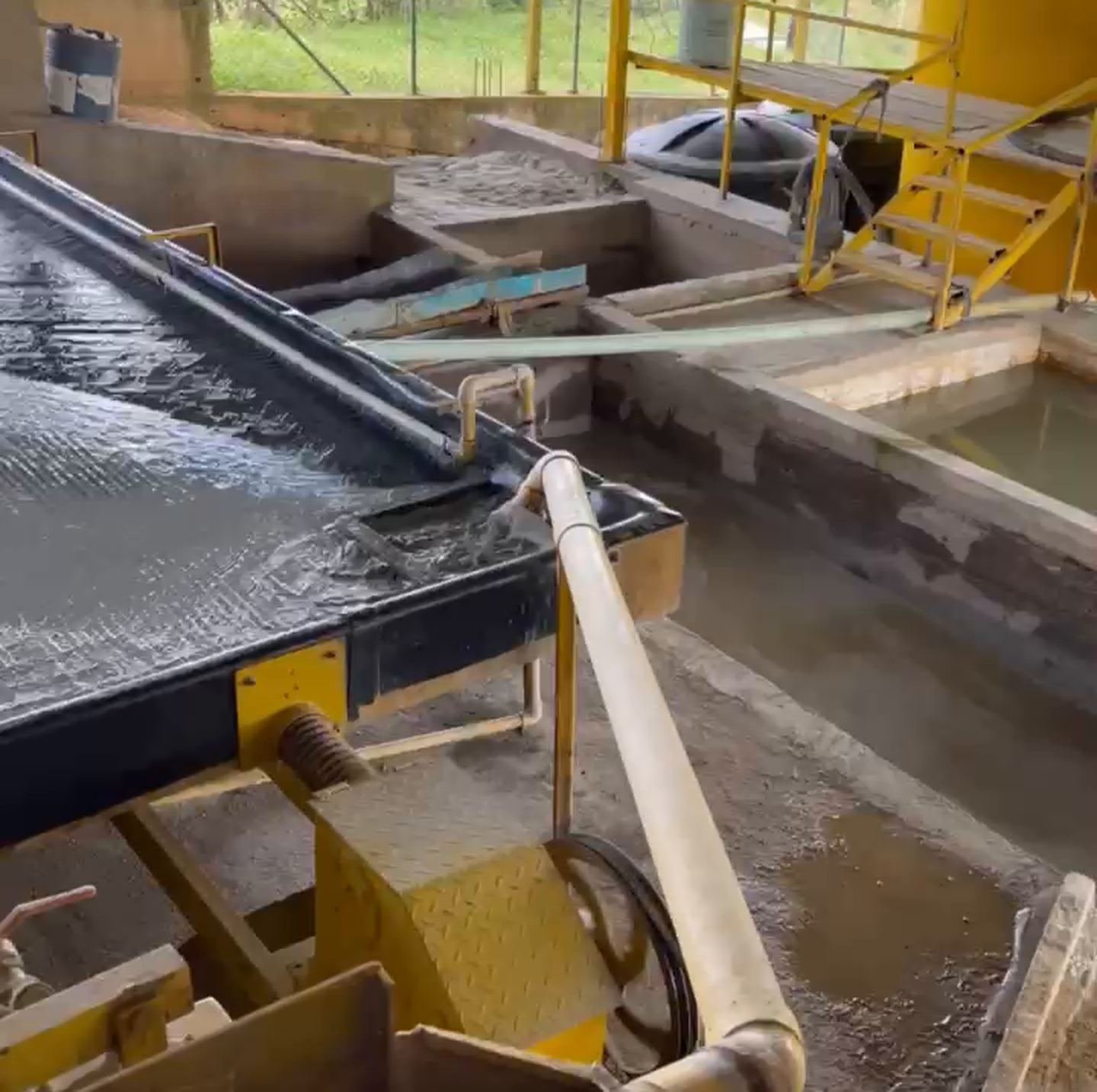

Gold grade is the amount of gold contained in the material, usually expressed in grams per tonne. The metallurgical balance compares the gold entering the processing plant with the gold recovered. With both measured at each point of the process, it is possible to establish at which stage the gold that never reaches the product is being lost.
Grade and metallurgical balance
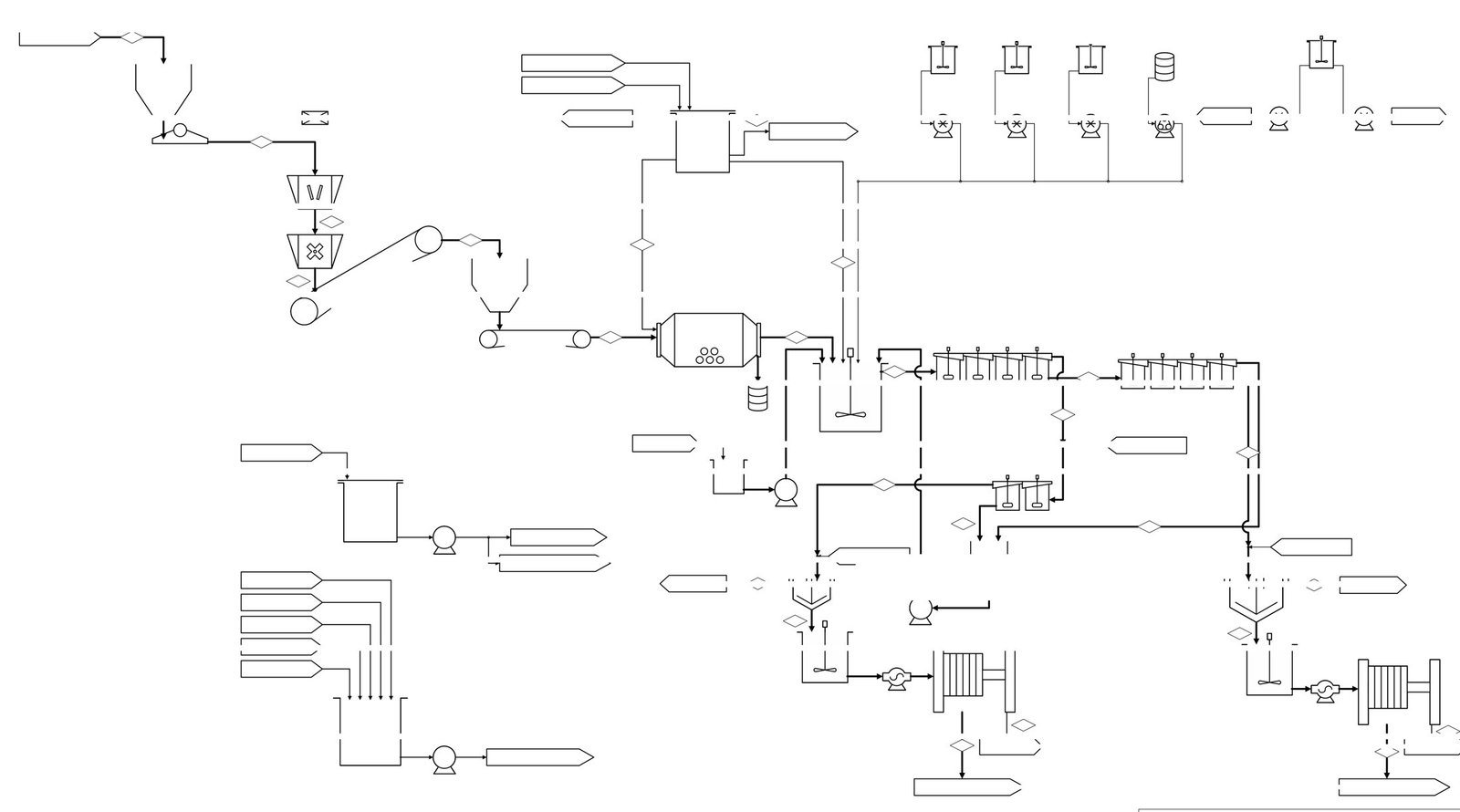
The balance is built from representative samples taken from the feed through to the tailings. The grade assays of those samples, combined with the tonnage of each stream, show how much gold comes in, how much leaves with the product and how much is lost at each stage. The basis of the calculation is the process flow diagram, which represents the plant's stages, its equipment and the path of the material, and which also serves to evaluate a change in the circuit before it is executed.
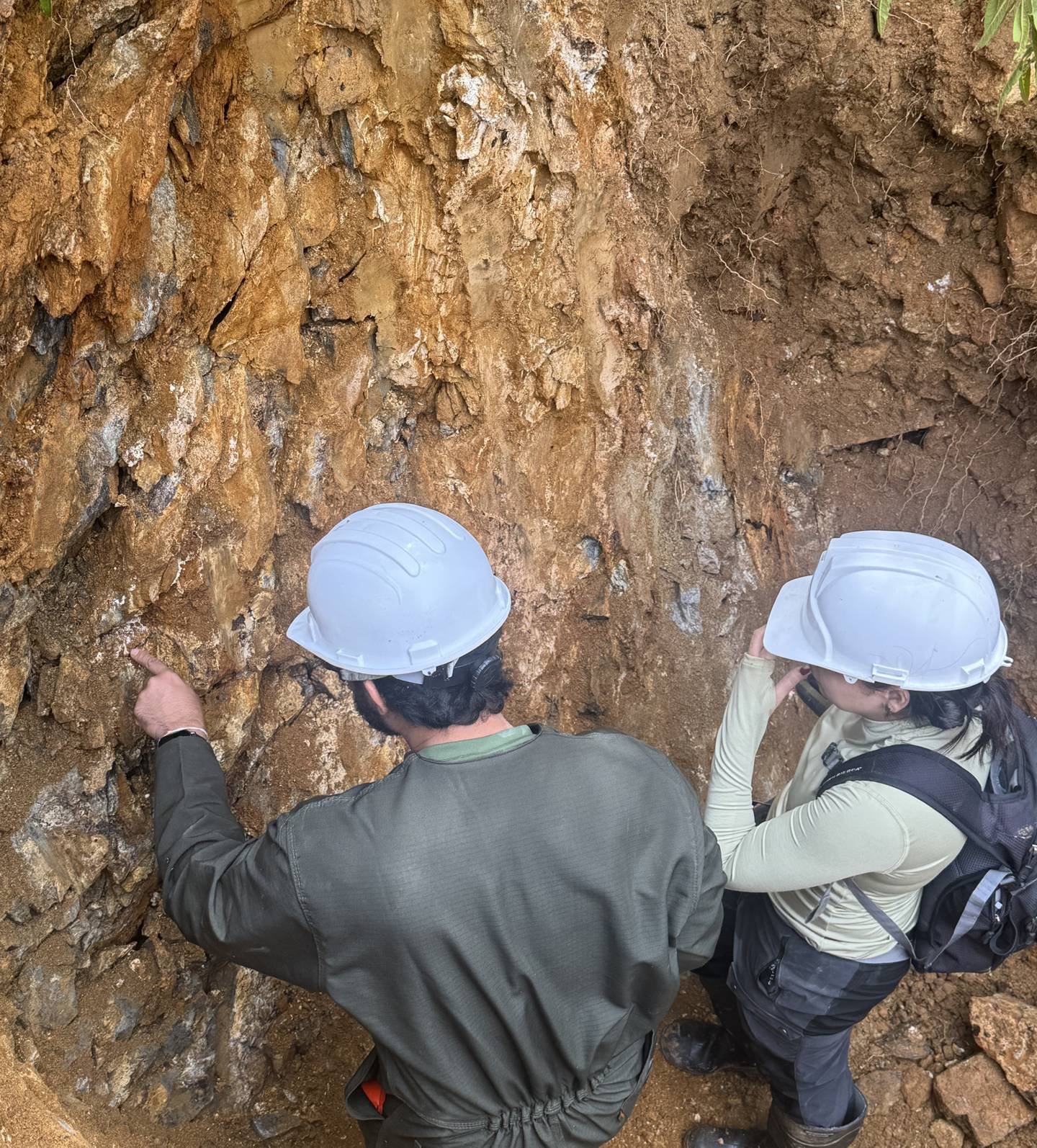
Grade also has a commercial use, because it defines the price when ore is bought and sold. An assay on a representative sample gives buyer and seller a common basis.
Where gold is lost in the plant
Low recovery can have very different origins, and the balance is what allows them to be separated before investing in a change:
- The ore: its characteristics may prevent the gold from being liberated or recovered with the current process.
- The process: a stage that does not operate under the right conditions lets gold pass to the tailings.
- The equipment: a machine performing below expectation reduces recovery even if the rest of the circuit works well.
Each cause calls for a different adjustment in crushing, grinding, concentration or recovery, which is why the diagnosis compares what is measured at each stage with the performance it should have.
What you receive at the end of the study
Our metallurgy team takes the samples at the plant, runs the assays and builds the balance by stage to establish where the loss comes from. You receive the grade assays, the metallurgical balance with mass balances per stream, the flow diagram of your plant with equipment sizing, and a diagnosis with operating recommendations for your circuit. We explain each recommendation in detail so you can decide, with data, which ones to implement.


